Entrades

S'estan mostrant les entrades amb l'etiqueta 1r batx e

Està tot escrit o cadascú crea el seu destí?

Imatge
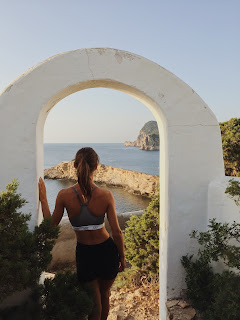
The relationship that I find between the image and the question is that the path marked with the lights, symbolizes a main path which most people follow as it could be, to form, to marry, to form a family ... But we can also choose others roads. Adriana Vilaró

Hi ha ordre en el desordre?

Imatge
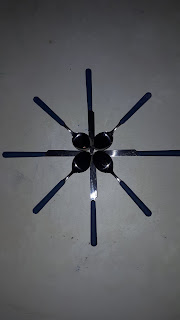
Ontologia With this question I want to ask if it is possible that there is order in the disorder. This photo that I have taken may show a lot of noise and disorder, but if you pay attention, you can observe a small order and here I would ask the question: Is there order in disorder? The importance is that if you look at it from the outside there can be a lot of disorder, but looking at things from another perspective, we can find new ways. Julia Gómez

Com podem arribar a la felicitat?

Imatge
epistemologia Considero que la felicitat és un sentiment que és provocat per moments específics i per persones concretes, ja que tu no ets feliç durant tota la vida, també passes per mals moments, per tant crec que la felicitat arriba en moments concrets. Noa Segalés

Què és el temps?

Imatge
METAFÍSICA Time is a very relative thing because at each moment we can decide the actions we do at that moment, and we can decide how much time we dedicate each thing to, and therefore in what things we invest our time daily. But something that cannot be controlled is the passage of time because that is a regular and constant thing and no matter how much you are doing one thing or another, time continues to pass. For example, if you have taken an action, you cannot change it because it becomes to past, and we lived in the present so we cannot go back in time and change that action, just as we cannot go to the future so we have to take advantage of every moment and think about what we do because if I miss it, i can not change it. Victor Quesada

Que fa que un fet sigui recordat?

Imatge
Epistemologia The relation of my picture and my question is that the photo album make reference to our memories. The questions asks why we have some memories about the past and why we forget a lot of events, so what makes especial those events for us to stay in our memory. Some memories are important days or events of our lifes, but we also remember things of when we where little that they don't seem to be apparently very special or important, so why we still remember them? Mauri Bataller

How do you define the real?

Imatge
We call what truly exists real, but if you are talking about what you can feel, what you can smell, what you can taste and see, then what is real? Alvaro Martínez

Es el desorden malo?

Imatge
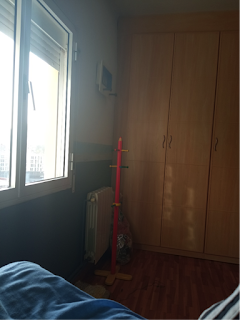
This is related to ethics, because it is asking if it is a good way of living, it has to do with the behaviour and the way you do things. What this picture shows is a room disordered and it can clearly show that nothing is happening for having the room disordered, it is not bad or good it is just a way of how you do thing and how you feel more comfortable. Jan Silera

Per què considerem què l'alba és bella?

Imatge
Rama estètica de la filosofia. The moment we see a sunrise, like the one shown in this photo, we think: how pretty and beautiful it is. At that specific instant the question arises and why is a sunrise beautiful? Possibly it is the contrast of colours between the intense yellow of the sun that stands out on the sky that minutes before was darkness or just the reflection of the solar rays in the rough sea. Human tastes are unique and different; however, few people think that this is an ugly scene. It may also be that this scene transmits feelings to us, for example, the beginning of a new day, an opportunity to be better or more productive. They are the small details that come together to form an intense scene that we consider to be "beautiful". Sofia Vicente

Un grafit el podem considera llibertat d’expressió o vandalisme?

Imatge
Branca: ETICA This image ask our self if we think that a graffiti is way of expressing the things that they are on your mind, this is only a shape of seeing this action, on the other hand we have the people that think that this type of painting is vandalism, because they paint were they want, some times they are disrespectful with some people work, this two way of seeing it are logical but which one is the correct? Aleix Alonso

Si el destí es real i tot passa per alguna raó, existeix la llibertat?

Imatge
BRANCA PSICOLÒGICA: Pertany a la branca de metafísica perquè incita a veure el funcionament lògic de la realitat d’una forma diferent i més abstracte RELATIONSHIP WITH PICTURE: This picture reflects how the city “falls asleep” with many citizens living in the same area but with completely opposite and varied beliefs, economical situations, ages and cultures. Despite this, everyone has something in common and that is, the uncertainty that destiny will bring tomorrow, one of the few things left in life that nobody can buy predict or control. Helena Serna

Fins a quin punt podem considerar haver viscut una vida plena quan no hem aconseguit arribar totes les nostres metes?

Imatge
Ética In this image we can find the metaphor of a man who, from the comfort of a home, tries to look through a window at everything that might have been, but that brick wall prevents him, referring to all the obstacles that he has not been able to overcome throughout his life, and therefore has made him stay in a glass bubble (the house) without being able to have fulfilled his goals. This leads me to ask myself the question of what is more worthwhile, living a full and free life or staying in your comfort zone without danger. Ana Ruperez

L'Alzheimer ens treu la nostra identitat?

Imatge
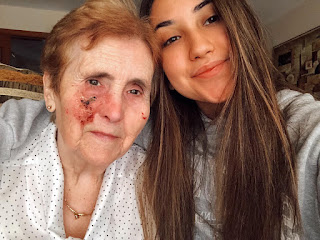
Existencialisme Is Alzheimer's really a silent enemy? This question goes beyond a disease. Memories are one of the main pilars of our identity, therefore, if when you have Alzheimer's you lose your memories, what is our identity based on? We say that Alzheimer's is a silent enemy because dementia comes secretly, however, it leaves its mark, because memory is invisible but without it we are nobody.However, we learn that the essence of people goes beyond their memory. If we leave aside the material world, we are left with our essence, from which our memories are part. Even if we put aside our memories, what would we have left? The soul. In other words, the essence of people is preserved despite having Alzheimer's. Nuria Tarrés

Per què la mort és un tema tabú en la nostra societat?

Imatge
METAFÍSICA We have learnt to be afraid of death. We act as if it doesn’t even exist and we get hurt when some of our loved ones pas away. We have got used to hiding death and talking about it with euphemisms. Some important philosophers as Heidegger said it ought not to be like that. Maybe it would be so much easier if we talked about it regularly. There are some moral doctrines as the Hedonism, some religions and different cultures who don’t feel pain for death, furthermore, they celebrate it. Why something like death, which gives a meaning to life, should be treated as one taboo topic in our society? Jordi Margalef

"Les nostres decisions ens defineixen?"

Imatge
Do our decisions define us? In our everyday, we, as human beings, are constantly making decisions about what we are about to do next. These decisions can be more or less significant: we might have thought about them for a long time or we just make them involuntarily. But the question is: how do these actions affect my environment? Who am I thinking of when making these decisions. At this point, you must be wondering... "what does the picture have to do with the tittle?". Well, this picture shows a pair of benches in one of the most concurrent streets in Barcelona, "La Diagonal". They are banned due to the pandemic: in order to avoid physical contact, people can't sit on them. When I saw them, I said to myself: "but what if I had spread my ankle" or "but what if I had gone on a really long run and I desperatelly needed a break?". These may sound vain or insignificant, but the fact of questioning to myself these questions, led me to a deeper...

És la bellesa sempre de color?

Imatge
Aquesta fotografia pertany a la branca de l'estètica (l'estudi de la bellesa i de l'art). The question we ask ourselves it's to think if life is better if you live it in colors. This means that the more cultures you get to know, the richer is your way of thinking. Regarding the photo, I think that each line of tulips represents a culture and that if we put all the colors together (we put the puzzle together) the picture is better but even if we put it together without color (in black and white) we will never make it more beautiful. Victor Duran

És la mort el final o és el començament d'alguna cosa més?

Imatge
We have been looking for the answer since time immemorial, which has given rise to religions, theories and above all much speculation. On the side of religion have been created different places where one goes after death these would be the heaven where they live beings like gods, angels, geniuses, saints or venerated ancestors, and hell a place of torment and punishment in the life after death.On the other hand, we also have reincarnation, a concept created by the human being that would be the beginning of a new life in a different body or physical form. Edu Sumalla

Existeix la perfecció?

Imatge
This picture attempts to represent perfection, perfection pertains to the study of reality, that is, metaphysics. Perfection, doesn’t exist. It is pure neurosis, it is a concept that can pursue us to the point of satiety, which can paralyze us and which we will never formally reach, because when we think that we have achieved it, we will realize that there is still a long way to go to achieve it. Man has traditionally sought perfection in all the tasks he has undertaken. It’s the holy grail, call it perfection, excellence, or any other modern name we want to give it. Arnau Martín

Som el mateix tipus de persones durant el dia que durant la nit?

Imatge
Metafísica All the people in the world has its personality, but this personality can change depending on the state of mind. Normally, during the day we are more distracted so we are not thinking much time about our problems because we are distracted or occupied and we are not sad. The night can be cold and lonely, it also can be enough long to think about our life and our worries. That make us sad and it is like we are different types of people during the day and the night. Ignasi Boquer

VIVIM PER EL NOSTRE FUTUR?

Imatge
Pertany a la filosofía ética. The future is something we all humans have wondered about since the very beginning. And although every one of us has a different thought about it, one thing we have in common is that we don't know what's going to happen nor we can predict it. So, my take on this: why don't we just stop caring about the future and start living the present? The present is all we have and it's what will build our future. We don't know the future until we live on it. Mar Prats

Perquè els miralls ens reflexen al revés?

Imatge
Metafísica Why do mirrors reflect us the other way around? This question is related to metaphysics. Why is the reflection of the tree and the rocks flipped when we look into the water? There is a barrier created between real life, the upper half of the foto, and the mystical reflection created by the lake, the other half of the picture. We barely can distinguish nature from the water reflection. Nevertheless, our brains tell us which are the real elements. What we know as reality could be a reflection from something? If we were surrounded by mirrors, would we see what is real and what is mirrored? How can we know what is real and what is not real? Is life real? Or a reflection? Paulina Navarro